Special Sessions

SS 03

Multimodal Foundation Models for Digital Twin–Integrated Prognostics and Health Management of Complex Engineering Systems
多模态大模型驱动的数字孪生与故障预测健康管理:复杂工程系统的虚实融合智能运维


随着航空航天、能源交通、智能制造等高端工程系统进入“多尺度—多域耦合—高不确定性”的复杂系统时代,PHM(故障预测与健康管理)正在从“单点状态监测”向“系统级虚实融合推演”演进。仅依赖数据驱动模型难以覆盖稀有故障、跨层级机理耦合与运行策略变化;仅依赖机理仿真又面临建模成本高、参数难标定、在线同步难等问题。
数字孪生为PHM提供了可推演的系统运行“世界模型”:在PHM关注的颗粒度上,通过可组合的多域模型(结构/热/流体/电/控制/任务与保障过程)表征退化—故障—维修—再配置的演化机理,支持诊断、寿命预测、风险评估与决策优化的闭环验证。然而复杂系统数字孪生建模天然是一个多尺度、多域融合与持续校准的问题。
近年来,多模态大模型(传感器时序、事件日志、维修工卡与自然语言技术资料、图谱/配置/结构数据等)为“面向PHM服务的孪生建模”带来新路径:可在统一语义空间中完成跨模态对齐与知识抽取,自动生成/补全可执行的孪生模型要素(结构、参数、约束、故障模式与维修动作),并实现在线同化与不确定性量化;在孪生环境中开展场景化推演,形成可审计的诊断解释、寿命预测与维护/调度策略建议。
本专题旨在汇聚“PHM × 数字孪生 × 多模态大模型”交叉领域的最新方法与工程实践,推动复杂工程系统健康管理从算法走向体系化、可验证、可部署的系统能力。

征稿主题包括但不限于:
- 面向PHM的数字孪生建模方法:多尺度/多域降阶、可组合建模、FMI/Modelica/SysML等集成
- 虚实同步与数据同化:状态估计、参数在线辨识、漂移检测与模型自适应校准
- 多模态大模型赋能的孪生工程:跨模态对齐、知识抽取、孪生要素自动生成与一致性校验
- 诊断—预测—决策一体化:可解释诊断、RUL/风险预测、不确定性量化、维护与调度优化
- 基于孪生推演的验证评估:场景库构建、故障注入、可审计评测基准与工程指标体系
- 典型行业应用:航空发动机/机队、轨道交通、电力与新能源、流程工业、智能制造等


As complex engineering systems in aerospace, energy/transportation, and intelligent manufacturing evolve toward multi-scale, multi-domain coupling and high uncertainty, Prognostics and Health Management (PHM) is shifting from isolated condition monitoring to system-level, virtual–physical integrated reasoning. Purely data-driven approaches struggle with rare faults, cross-level physics coupling, and policy changes, while purely physics-based simulation faces high modeling cost, parameter identifiability issues, and online synchronization challenges.
Digital twins provide an executable “world model” for PHM: at the PHM-relevant granularity, composable multi-domain models (structure/thermal/flow/electrical/control/mission and maintenance processes) capture the evolution of degradation–fault–repair–reconfiguration and enable closed-loop verification for diagnosis, RUL prediction, risk assessment, and decision optimization. However, building and maintaining a complex-system twin is inherently a multi-scale, multi-domain fusion and continual calibration problem.
Multimodal foundation models—leveraging sensor time series, event logs, maintenance work orders, natural-language technical documents, and graph/configuration/structural data—open a new pathway for PHM-oriented twin engineering. They can align heterogeneous evidence in a unified semantic space, extract actionable knowledge, auto-generate or complete executable twin elements (structures, parameters, constraints, failure modes, and maintenance actions), and support online data assimilation with uncertainty quantification. Scenario-based simulation in the twin then yields auditable diagnostic explanations, prognostic estimates, and maintenance/scheduling recommendations.
This Special Session aims to bring together cutting-edge methods and industrial practices at the intersection of PHM, digital twins, and multimodal foundation models, advancing health management from algorithms to verifiable, deployable system capabilities.

Topics of interest include, but are not limited to:
- PHM-oriented digital twin modeling: multi-scale/multi-domain reduction, composable modeling, FMI/Modelica/SysML integration
- Virtual–physical synchronization & data assimilation: state estimation, online parameter identification, drift detection, adaptive calibration
- Multimodal foundation models for twin engineering: cross-modal alignment, knowledge extraction, auto-generation and consistency checking of twin artifacts
- Integrated diagnosis–prognosis–decision: explainable diagnosis, RUL/risk prediction, uncertainty quantification, maintenance & scheduling optimization
- Twin-based verification and evaluation: scenario libraries, fault injection, auditable benchmarks and engineering KPIs
- Industrial applications: aero-engines/fleets, rail, power & renewables, process industry, intelligent manufacturing

Part 02

Special Session Chair(s):

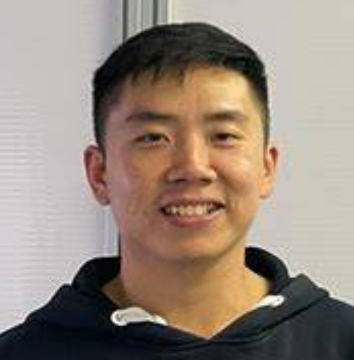
Yang Hu
Beihang University, China
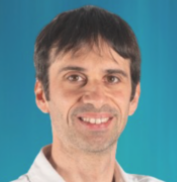
Wei Wang
City University of Hong Kong, China
Zhiguo Zeng
Université Paris-Saclay, France